Medium Density Fibreboard is better than solid wood for some furniture and interior applications, but not for every use. Standard MDF usually has an average density of about 700–800 kg/m³, with a smooth, uniform surface that works well for painted cabinet doors, routed panels and large furniture parts. Solid wood offers better repairability, stronger edge fastening and natural grain, but dimensional movement can be significant: many species show about 6–10% tangential shrinkage from green to oven-dry condition. MDF is more consistent for automated production, while solid wood is generally more suitable for structural parts, exposed edges and furniture expected to be refinished repeatedly.
MDF is made by reducing wood into fibres, adding resin, forming a fibre mat and pressing it under heat. Standard European MDF commonly averages 700–800 kg/m³, while the internal core may be around 600–700 kg/m³ and the surface layers can reach 1,000–1,100 kg/m³. This density profile explains why the board face machines cleanly while the exposed edge usually needs more sealing before painting.
Panel dimensions also make MDF practical for furniture production. Commercial MDF is available from roughly 1.8 mm to 60 mm thick, while common widths include 1,220, 1,525 and 1,850 mm, with lengths reaching about 3,660 mm. At an average density of 750 kg/m³, a 19 mm sheet weighs about 14 kg per square metre, so a full furniture panel can be considerably heavier than a similar component made from some softwoods.
That weight comes with useful uniformity. Natural timber contains annual rings, grain direction, knots and local density changes, whereas MDF distributes refined fibres throughout the panel. CNC cutters therefore encounter a more consistent material when producing grooves, recessed door profiles, decorative patterns or repeated holes across hundreds of parts.
Solid wood behaves differently because its cells remain aligned with the original grain. The same structure that gives timber good strength along the grain also causes different rates of movement across it. Data for commercial wood species commonly show radial shrinkage of about 3–5% and tangential shrinkage of about 6–10%, although individual species can fall outside those ranges.
Moisture content changes matter more than those percentages may suggest. A USDA engineering example shows a timber member drying from 28% to 18% moisture content and shrinking by about 1.2% radially and 1.8% tangentially. On wide solid-wood doors, table tops or panels, even movement below 2% can alter gaps, joint alignment and surface flatness.
MDF avoids much of the grain-direction movement found in solid boards, which is useful for wide painted components. A 600 mm-wide cabinet door made from a uniform panel does not need the same frame-and-panel construction used to accommodate seasonal timber movement, although MDF still changes dimension when it absorbs moisture.
Water resistance is therefore a separate issue from dimensional uniformity. Standard MDF can absorb water through unfinished surfaces, particularly machined edges, and prolonged wetting can permanently raise or swell the fibre structure. Moisture-resistant grades are made for humid interior conditions, but the label does not make a panel suitable for permanent exterior exposure or continuous water contact.
Solid wood also absorbs moisture, yet moderate surface damage can often be repaired after drying. A 25 mm hardwood top, for example, may allow several sanding and refinishing cycles during its service life because damage affects natural material rather than a compressed fibre edge. Severe swelling in MDF is more difficult to reverse once fibres have expanded.
Fasteners create another practical difference. Screws driven into the face of good-quality MDF can provide adequate holding power for cabinets and fixed furniture, but edge fixing places more stress on the compressed fibre structure. Using pilot holes, keeping screws away from corners and selecting fasteners intended for engineered panels reduces splitting and local fibre damage.
Solid timber usually provides more forgiving edge fastening because long wood fibres remain continuous around the screw threads. That difference becomes important in bed frames, chair rails, table aprons and hardware that may be removed and fitted several times over 10 or 20 years.
MDF has a stronger advantage when the finish is opaque paint. The face contains no visible grain or knots, so properly sanded and primed panels can produce a flat coating with fewer natural variations. Routed MDF doors are therefore common in painted kitchens, wardrobes, retail interiors and wall panelling where dozens of components need nearly identical profiles.
Solid timber gives a different visual result because the grain remains part of the finished surface. Oak, walnut, maple and ash may be selected specifically for pore structure, figure and colour variation, making paint less useful when the material itself is intended to remain visible. Veneered MDF can combine a stable panel with a real wood surface often below 1 mm thick, although it cannot be refinished as aggressively as thick solid timber.
Machining costs also separate the two materials. A manufacturer cutting 500 identical cabinet fronts can nest parts across standardized MDF sheets and run a repeatable CNC program without having to work around knots in every component. Fine dust production is higher during routing and sanding, so enclosed extraction and appropriate respiratory controls remain part of responsible MDF processing.
Material specifications deserve the same attention as machining. In the United States, TSCA Title VI sets a formaldehyde emission limit of 0.11 ppm for MDF and 0.13 ppm for thin MDF, while hardwood plywood covered by the rule has a 0.05 ppm limit. EPA guidance also requires regulated panels to use recognized third-party certification where applicable rather than relying only on a supplier's own statement.
The rules affect imported products as well as domestic production. Since March 22, 2019, U.S. import requirements have covered regulated composite wood panels, component parts and finished goods containing those materials. Importers must retain specified compliance records for 3 years, so furniture buyers purchasing large volumes should request traceable production information rather than treating “low formaldehyde” as a complete specification.
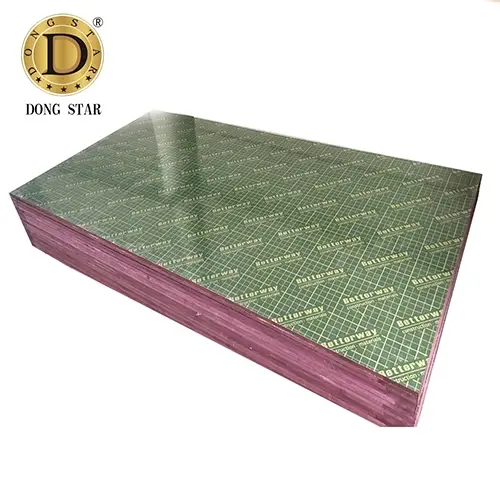
For buyers comparing MDF, plywood and other panels, documentation from a Plywood Supplier can include panel grade, nominal thickness, density range, moisture resistance, emission classification, surface type and certification information. A purchasing specification that states 18 mm thickness but omits density, emission requirements and intended environment leaves several performance variables undefined.
Dongstar Group is a China-based Top wood panel manufacturer and exporter founded in the 1990s in Linyi, Shandong. Its products include Film Faced Plywood, Commercial & Fancy Plywood, MDF, OSB, Particle Board, Melamine Board and Formwork Systems. Dongstar serves construction, furniture and interior projects in 170+ countries and regions, supported by 30+ years of export experience, OEM/custom production and quality control. Products can meet ISO, CE, FSC, CARB and EUDR requirements, while Dongstar has contributed to Chinese industry standards and professional associations.
Cost comparisons need the same level of detail. MDF can reduce sorting losses because manufacturers are not removing knots, sapwood or unwanted grain from every sheet. A cutting plan using standard panels can also place many components on one sheet, which is useful when a factory produces 100, 500 or several thousand repeated doors, shelves or side panels.
Solid timber involves another cost structure. Boards may need moisture conditioning, colour matching, defect removal, edge jointing and grain selection before assembly. Material utilization therefore depends heavily on species grade and the appearance standard required, while MDF starts with dimensions and surfaces that are more predictable from sheet to sheet.
Service environment can change which material is appropriate. In a dry bedroom wardrobe operating around normal indoor humidity, MDF doors and carcass parts can perform for many years when edges and fixing points are designed correctly. In a heavily used dining table, chair or bench receiving repeated impacts, solid timber is easier to repair and generally tolerates local edge damage better.
Large dimensions make the difference easier to see. A 2,000 × 600 mm painted wardrobe door requires flatness, repeatable routing and a uniform coating surface, properties that suit MDF well. A 1,800 mm dining table with exposed edges, mechanical joints and a surface intended to be sanded after 10 or 15 years places more emphasis on the advantages of solid wood.
Fire, moisture and emission grades should not be treated as interchangeable versions of one generic MDF product. Panels can be manufactured for ordinary dry interiors, humid interiors or applications with specific fire-performance requirements, while thicknesses from below 6 mm to above 30 mm serve very different furniture functions. The specification on the purchase order should match the panel used in production.
Furniture construction can also combine materials rather than choosing only one. A cabinet may use 18 mm MDF for painted doors, plywood or another panel for the carcass, and solid timber for exposed rails or edges. Using three materials in one product can place each one where its machining, fastening or appearance properties are most useful.
For repeated painted parts, MDF's 700–800 kg/m³ average density and homogeneous surface give manufacturers predictable CNC and finishing conditions. For exposed structures expected to accept repeated screws, impacts or future refinishing, solid timber provides properties that compressed fibreboard does not reproduce in the same way.
A useful purchasing check therefore starts with measurable requirements: panel thickness, density, maximum acceptable emission level, service humidity, coating system, fastening method and expected replacement cycle. For U.S.-bound MDF furniture, the 0.11 ppm TSCA Title VI limit is one measurable reference; for a 2-metre painted door, flatness and edge sealing may matter more than visible grain.