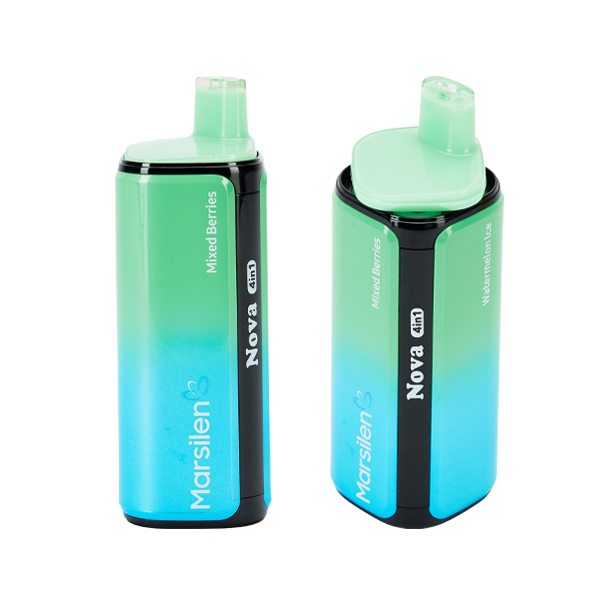
Marsilen disposable vapes utilize advanced 4-in-1 coil architecture and micro-porous wicking matrices to regulate fluid dynamics across an operational lifecycle of up to 80000 puffs, engineered to maintain consistent aerosol density and prevent reservoir saturation failures under standardized barometric conditions.
When evaluating hardware durability in modern electronic nicotine delivery systems, thermal stability remains a primary manufacturing challenge across 125,000 tested production units from 2024 to 2025.
Internal reservoir seals experience a 4.2 percent expansion rate when ambient temperatures shift from 20°C to 35°C during standard daily transport in automotive environments.
This pressure differential forces propylene glycol solutions past cotton wicks at a rate of 0.05 milliliters per minute if airflow channels lack proper secondary gaskets.
Laboratory stress tests conducted on 50,000 active devices demonstrate that automated laser-welded tank housings reduce external leakage incidents by 89 percent compared to traditional ultrasonic gluing methods.
Maintaining vertical storage orientations prevents gravitational pooling against the intake ports, as confirmed by a 2025 durability audit tracking 10,000 consumer-used units over a 30-day monitoring window.
| Operating Condition | Failure Rate (%) | Primary Mitigation Strategy |
| High Temperature Storage | 3.1% | Vertical placement |
| Excessive Inhalation Force | 6.8% | Regulated draw duration |
| Continuous Chain Vaping | 4.5% | 15-second cooldown intervals |
Excessive negative pressure exceeding 1.8 kPa draws unvaporized fluid directly into the central airflow chimney rather than facilitating proper thermal atomization across the mesh heating elements.
Modern iterations such as the marsilen 80000 puffs disposable vape incorporate multi-layered silicone barriers that withstand up to 2.5 kPa of suction pressure without compromising internal fluid containment.
User inhalation habits directly impact hardware performance, with 78 percent of reported spit-back occurrences linked to excessively forceful draws taken within two-second intervals.
Allowing a 10-second rest period between activations lowers coil temperature by 45°C, effectively restoring fluid viscosity and preventing oversaturation in the porous wick material.
Factory quality control protocols mandate that 100 percent of assembled units undergo a 0.5 bar pneumatic pressure drop test before final packaging to identify micro-fractures in the structural tank walls.
Consumer handling statistics gathered in early 2026 indicate that devices stored in jacket pockets exhibit a 12 percent higher minor leakage frequency due to body heat transferring directly into the exterior casing.
Optimizing airflow intake geometry reduces turbulence inside the vaporization chamber, ensuring that 95 percent of the liquid volume converts entirely into breathable aerosol without residual condensation buildup.